
TIRE RECYCLING EQUIPMENT
Dust Collector For Tire Recycling
Collect airborne dust from rubber reduction, fiber separation and grinding with pulse-cleaned filtration.
PROCESSFiltration & collectionOUTPUTCollected dust
THE PROCESS
Dust collector for tire recycling overview
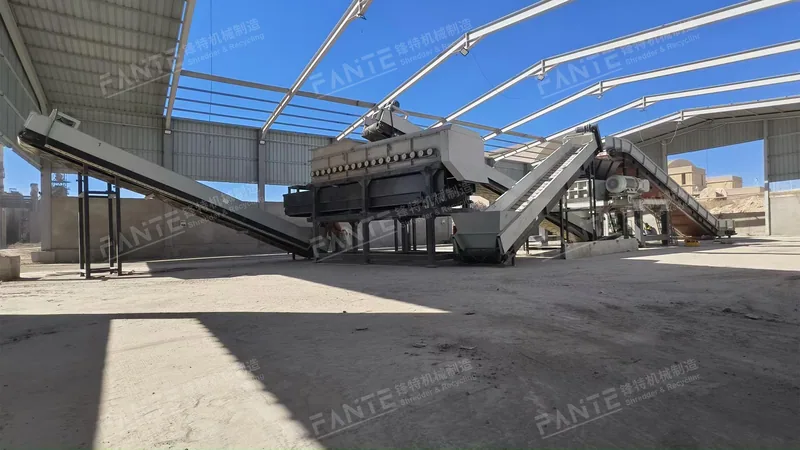
The FANTE dust collector captures dust carried by extraction airflow from tire-rubber processing points. The supplied arrangement uses pulse cleaning to remove collected dust from the filter surfaces during operation.
Extraction points can be provided around the rasper, granulator, fiber separator and rubber grinder. The collector and connected ducting form a dust-control system; they do not replace the rubber-product collection and material-separation equipment.
Explore recovered material applications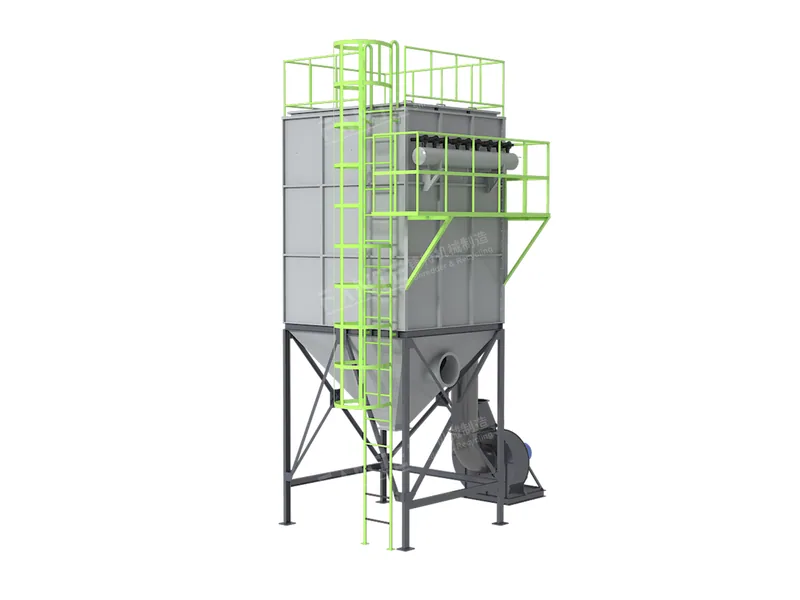
Key Features
High-Efficiency Dust Filtration
Filter bags capture airborne rubber and textile particles generated during shredding, grinding, and conveying.
Pulse-Jet Cleaning System
Compressed air automatically cleans filter bags to maintain filtration performance and reduce dust buildup.
Cleaner Production Environment
Helps control airborne dust and improve working conditions around processing equipment.
Continuous Dust Collection
Designed for integration with multiple dust-generating machines to support centralized dust extraction.
Reduced Filter Maintenance
Automatic filter cleaning reduces manual maintenance frequency and helps extend filter service life.
Customizable Airflow Capacity
Dust collection capacity can be configured according to equipment layout, dust generation, and project requirements.
Process Overview and Technical Specifications
| Category / Model | Parameter | Details |
|---|---|---|
| Process overview | Input | Dust-laden extraction airflow |
| Collection method | Filtration with pulse cleaning | |
| Connection points | Rasper, granulator, fiber separator and rubber grinder as configured | |
| Output | Collected processing dust | |
| System components | Collector, extraction points and connected ducting | |
| Technical specifications | Filter medium | Filter bags |
| Filter cleaning | Automatic compressed-air pulse jets |
Where it fits in the line.
01 / MATERIAL INDust-laden airflow
02 / PROCESSFiltration & collection
03 / MATERIAL OUTCollected dust
Tire recycling projects
View all projects
FAQ
What dust-cleaning method does the collector use?
The collector uses pulse-jet cleaning to remove accumulated dust from the filter media automatically during operation.
Do the filters need routine manual dust cleaning?
Pulse cleaning removes accumulated dust during operation, so routine dust removal is automatic rather than manual. Filter inspection and replacement remain part of maintenance.
How long do the filter bags normally last?
Filter-bag service life is approximately 1–2 years under normal operating conditions. Actual replacement needs depend on dust loading, operation and filter condition.
Which machines can be connected to the dust system?
The listed collection points include the rasper, granulator, fiber separator and grinder, distributed across the tire recycling process.
Does pulse cleaning eliminate filter maintenance?
No. Automatic pulse cleaning removes dust during operation, but filters and extraction components still need inspection and replacement according to their condition and operating duty.
EQUIPMENT & PROCESS
Selection and process integration
Rubber Dust Collection Equipment
Dust collection handles airborne material generated during rubber processing. Plan the extraction connections around the reduction and separation stages that require them.
Dust Extraction For Tire Granulation
Granulation and associated material transfer can require local extraction. Review collection points and their connection to the dust system as part of the complete installation.
Dust Collection For Rubber Grinding
Grinding and powder collection need coordinated material and air handling. Discuss the grinding-stage connections and collected-dust handling for the proposed route.
Pulse Cleaned Dust Collector For Rubber Processing
Pulse cleaning is part of the filtration arrangement described for this equipment. Selection should follow the actual extraction duty rather than a generic plant-wide assumption.
CONTACT US
Tell us about your
tire recycling project.
Start with your raw material and the output you want to produce. We will use your project requirements to discuss a suitable configuration.
Email: info@recycling-tyre.com