
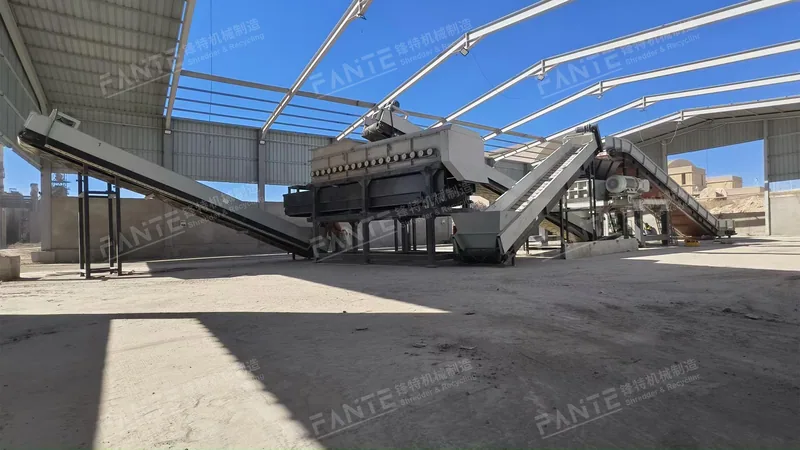
TIRE RECYCLING EQUIPMENT
Rubber Granule Screening Machine
Separate mixed rubber granules into selected particle-size grades after fine reduction.
PROCESSScreen gradingOUTPUTSelected granule fractions
THE PROCESS
Rubber granule screening machine overview
The rubber granule screening machine grades the mixed output from rubber granulation. Multi-layer screens divide the material into separate particle-size fractions for collection, helping prepare the required crumb rubber grades for downstream manufacture.
The supplied product information includes configurations for three fractions and target grades such as 1–3 mm or 2–4 mm. Screen selection controls grading; it does not replace a granulator, magnet or fiber separator.
Explore recovered material applications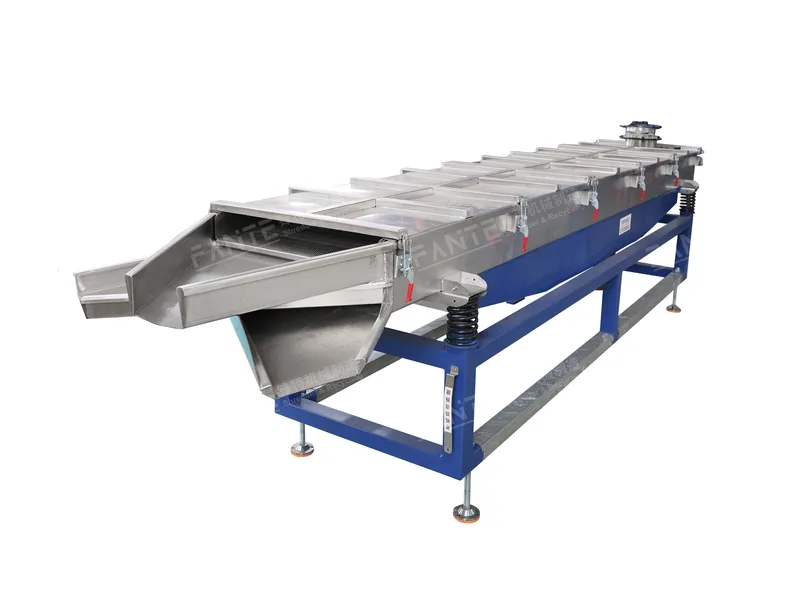
Key Features
Multi-Size Particle Classification
Separates rubber granules into different size grades through multi-layer screening.
Accurate Size Separation
Screen mesh specifications can be selected to match different finished product requirements.
High Screening Efficiency
Vibrating motion promotes material distribution and improves particle separation.
Reduced Oversized Material
Separates oversized particles for return to the granulator, helping maintain consistent product quality.
Stable Vibrating Performance
Balanced vibration components support smooth material movement and reliable screening.
Easy Screen Replacement
Replaceable screen meshes simplify maintenance and allow flexible product specifications.
Process Overview and Technical Specifications
| Category / Model | Parameter | Details |
|---|---|---|
| Process overview | Input | Mixed rubber granules after fine reduction |
| Process position | Particle grading after granulation | |
| Operation | Multi-layer screening | |
| Grade examples | 1–3 mm or 2–4 mm with selected screen configuration | |
| Outputs | Separately collected rubber granule fractions | |
| Technical specifications | Screen configuration | Multiple screen layers |
| Screening method | Vibration | |
| Size adjustment | Replaceable screen mesh |
Where it fits in the line.
01 / MATERIAL INMixed granules
02 / PROCESSScreen grading
03 / MATERIAL OUTSelected granule fractions
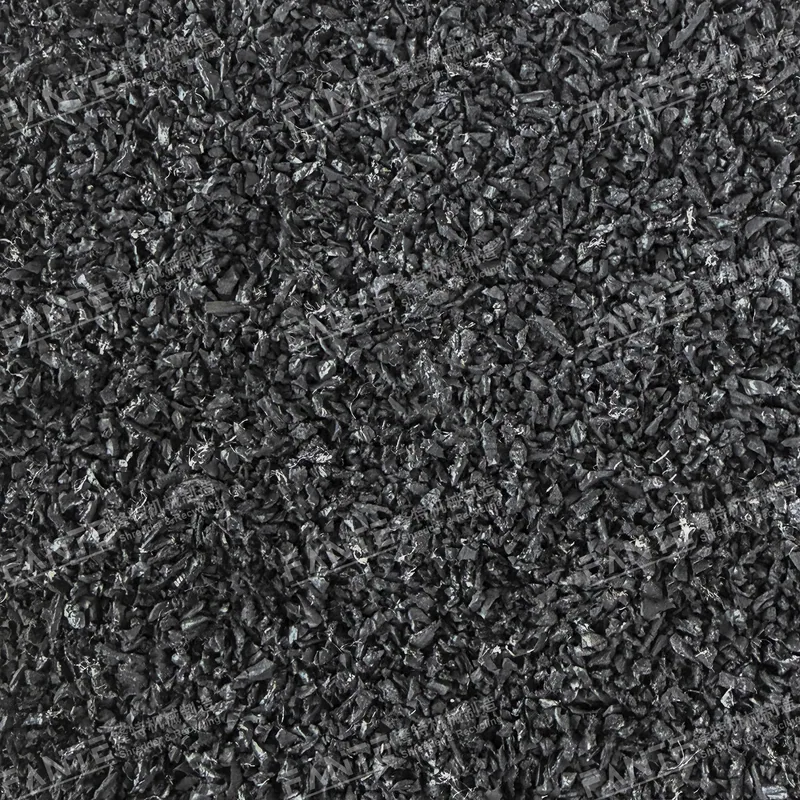
MATERIAL AFTER PROCESSING
Selected granule fractions.
Grade rubber granules into selected size fractions for separate collection or recirculation.
Supplied material reference for this processing stage.
Tire recycling projects
View all projects
FAQ
How many granule fractions can be screened at once?
The machine can separate three particle-size fractions, with the screening arrangement configured for the required products.
Can the screen prepare 1–3 mm or 2–4 mm rubber grades?
Yes. These are listed examples of selectable grading requirements. The screen decks should be chosen for the agreed fractions.
Are the different rubber sizes collected separately?
The multi-layer screening arrangement separates the granules by size so that the selected fractions can be collected independently.
At which stage is granule grading performed?
It is installed after fine rubber reduction, where the mixed granule stream is divided into product sizes.
Can screening alone remove steel and fiber contamination?
Screening sorts the material mainly by particle size. Magnetic recovery and fiber separation perform the separate cleaning duties needed in a complete crumb rubber line.
EQUIPMENT & PROCESS
Selection and process integration
Crumb Rubber Grading Equipment
Grading separates mixed granules into selected size fractions. Agree the receiving particle specification before choosing how the rubber product will be screened and collected.
Rubber Granule Size Separation Machine
The screening stage sorts rubber particles by size rather than removing steel or textile by itself. Include the appropriate separation equipment elsewhere in the route.
Rubber Particle Screening Equipment
Place particle screening after suitable rubber reduction. Discuss target fractions and whether oversized rubber should return for further processing.
Rubber Granule Screening After Granulation
Granulation creates a mixed particle stream; screening defines the collected grades. Review the connection between these stages and the intended product handling.
CONTACT US
Tell us about your
tire recycling project.
Start with your raw material and the output you want to produce. We will use your project requirements to discuss a suitable configuration.
Email: info@recycling-tyre.com