
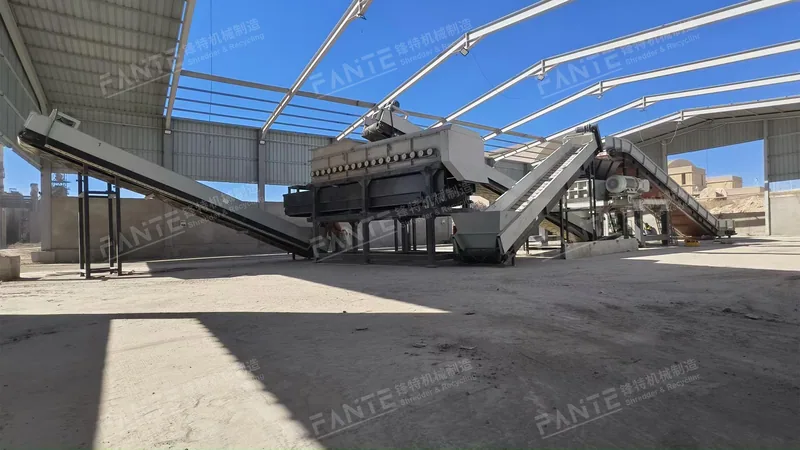
TIRE RECYCLING EQUIPMENT
Tire Cutter Machine for Waste Tire Preparation
Cut prepared waste tires into sections for easier feeding to a tire shredder.
PROCESSSection cuttingOUTPUTTire sections
THE PROCESS
Tire cutter overview
The FANTE tire cutter reduces the physical size of waste car and truck tires before shredding. It is used after bead-wire removal where the tire dimensions require a smaller feed section for the next machine.
Cutting changes the shape and feed size of the tire; it does not make finished rubber granules. Smaller passenger tires may enter a suitable shredder directly, while larger truck tires often benefit from a separate cutting stage.
Explore recovered material applications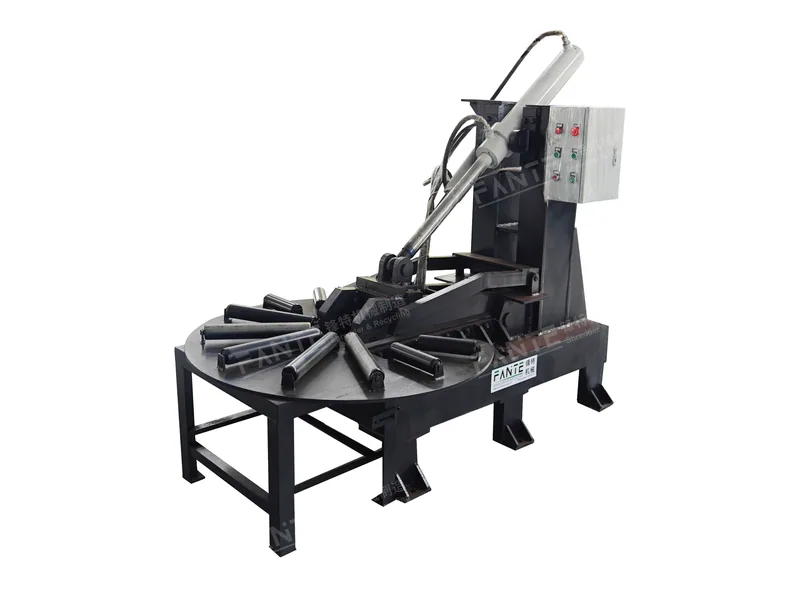
Key Features
Powerful Tire Cutting Performance
Heavy-duty cutting blades handle thick rubber sections and reinforced tire structures.
Reduced Tire Dimensions
Cuts whole tires into smaller sections for easier shredding processing.
Heavy-Duty Blade Structure
Wear-resistant blades withstand repeated cutting forces and demanding operating conditions.
Stable Hydraulic Drive
Hydraulic power delivers strong and consistent cutting force during operation.
Improved Processing Efficiency
Mechanized cutting reduces manual preparation time and supports continuous downstream processing.
Flexible Cutting Configuration
Cutting specifications can be customized according to tire dimensions and production requirements.
Process Overview and Technical Specifications
| Category / Model | Parameter | Details |
|---|---|---|
| Process overview | Input | Prepared car and truck tires with bead wire removed |
| Process position | Tire preparation before primary shredding | |
| Operation | Tire section cutting | |
| Output | Cut tire sections | |
| Downstream equipment | Primary tire shredder | |
| Technical specifications | Maximum tire diameter | 1600 mm |
| Power | 11 kW | |
| Weight | Approx. 2200 kg | |
| Output size | 100-400 mm |
Where it fits in the line.
01 / MATERIAL INPrepared tires
02 / PROCESSSection cutting
03 / MATERIAL OUTTire sections
The equipment at work.
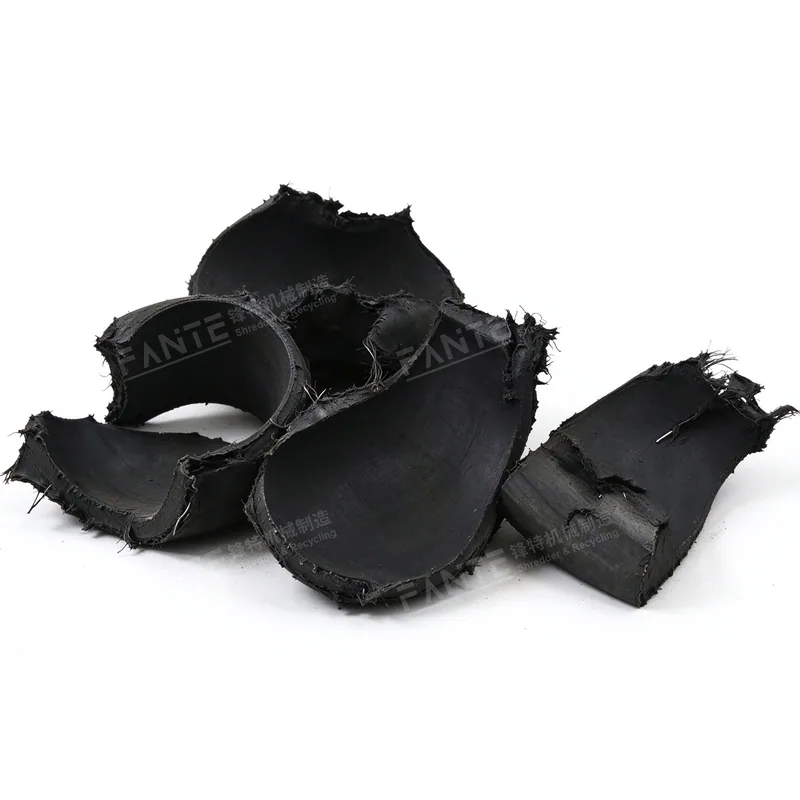
MATERIAL AFTER PROCESSING
Tire sections.
Cut prepared passenger and truck tires into sections for the next shredding stage.
Supplied material reference for this processing stage.
Tire recycling projects
View all projects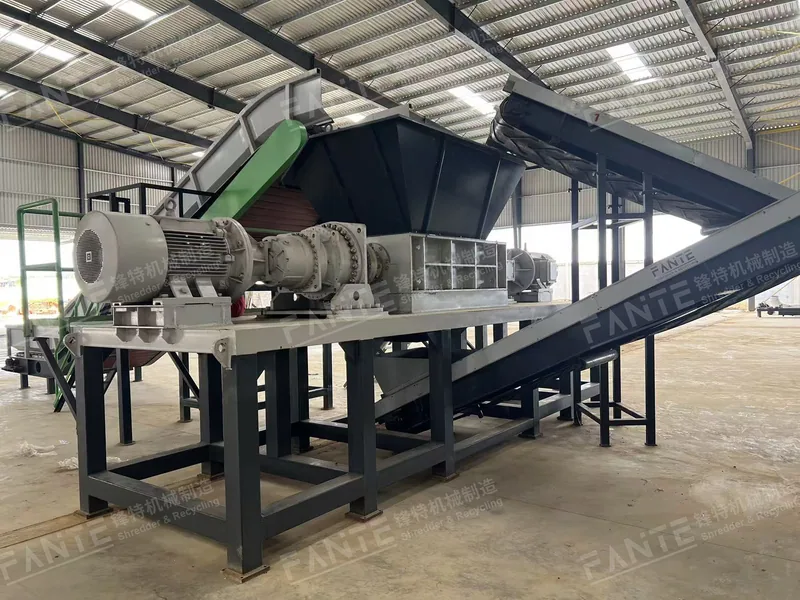
FAQ
How many tires can the cutter prepare per hour?
Processing can reach up to 60 tires per hour, depending on the cutter model and configuration. This is a tire count, not a mass-throughput rating.
Can a line for small passenger-car tires omit the cutter?
Yes, where the selected shredder can accept the whole tire. The material and required downstream product determine whether a separate cutting stage is included.
Is the tire cutter suitable for truck tires?
Yes. Cutting truck tires into smaller sections reduces the feed size presented to the shredder and supports more manageable feeding.
Should the bead wire be removed before tire cutting?
The listed feed material is passenger-car or truck tires with bead wire already removed. Debeading belongs ahead of this cutter in that preparation route.
Is a tire cutter a rubber granulator?
No. A tire cutter makes large feed sections for primary shredding. A rubber granulator works much later in the process on reduced rubber to produce smaller particles.
EQUIPMENT & PROCESS
Selection and process integration
Waste Tire Cutting Machine
The cutter prepares tire sections for downstream handling and reduction. Select the cutting arrangement around the actual tire type and the following shredder feed requirement.
Tire Cutter For Shredder Feed Preparation
Prepared tire sections must fit the next machine. Agree the intended section dimensions and transfer arrangement before choosing the front-end cutting stage.
Scrap Tire Section Cutting Machine
Cutting and shredding perform different duties: the cutter prepares sections, while the shredder produces coarse shreds. Include both stages where the incoming tire requires them.
Tire Cutting Equipment Before Shredding
Use cutting when tire dimensions or handling conditions require preparation before primary shredding. For large mining and earthmoving tires, review the dedicated OTR cutter page.
CONTACT US
Tell us about your
tire recycling project.
Start with your raw material and the output you want to produce. We will use your project requirements to discuss a suitable configuration.
Email: info@recycling-tyre.com